 Isah
Isah Real work. Real learning.
A look at electrical and automation work, practical problem-solving and the lessons that come from working with real systems.
Practical work behind the knowledge
Electrical knowledge becomes more useful when you can apply it to real systems. This section will document practical work, technical challenges and lessons from working with electrical and automation systems.
What I work with
Industrial Electrical Systems
Practical work involving industrial electrical systems, maintenance and electrical control.
Control Panels & Motor Control
Control panels, motor control systems and the practical wiring and troubleshooting behind them.
Automation & Troubleshooting
Automation systems, fault-finding and the process of understanding problems and finding practical solutions.
Project case studies
A look at real electrical and automation work, including the process, the problems and what I learned.
Case Study — Built with a colleague
Conveyor Control Panel Build
A control panel I built with a colleague to control a conveyor system used to move cartons of finished products from the factory to a nearby warehouse.
The Project
The conveyor was designed to move cartons of finished products from the factory to a nearby warehouse. The cartons were heavy enough that moving them manually between the two locations was not convenient, so the conveyor provided an easier way to transport them.
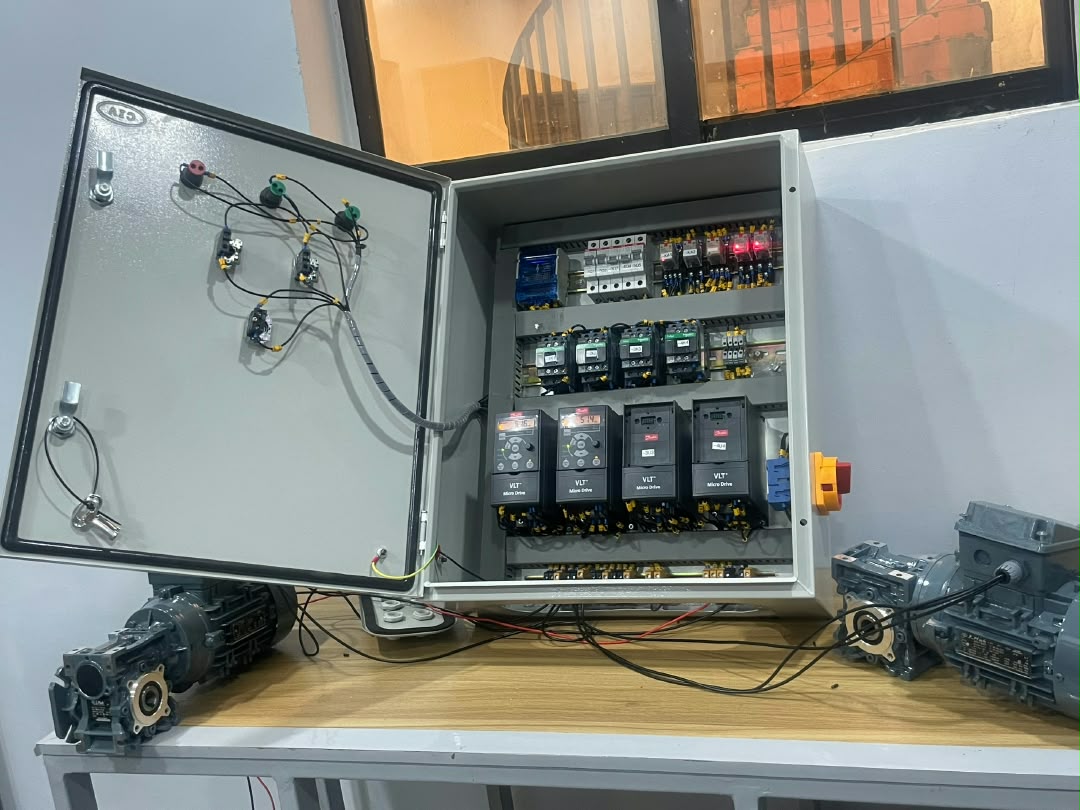
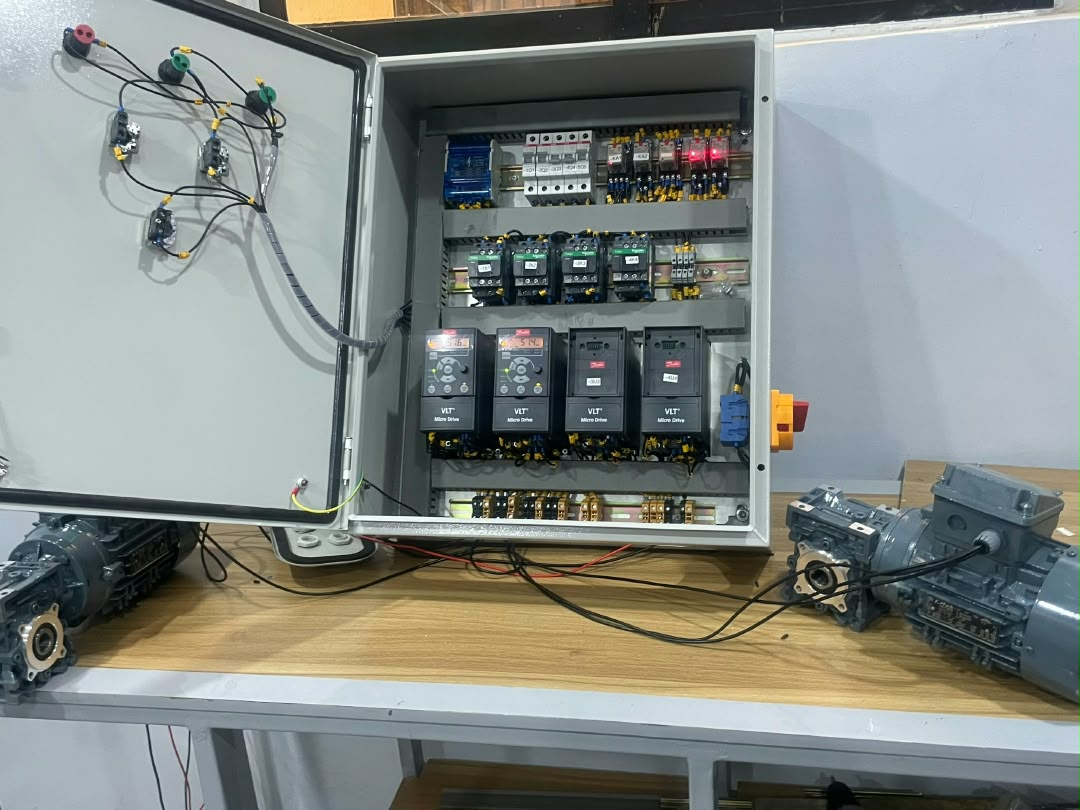
How We Built It
Site inspection
When the job was given to us, we first carried out a visual inspection to see where the conveyor could be installed.
Panel design
We used software to design the control panel and plan how the components would be arranged.
Component research and selection
We researched the components needed for the panel.
Wiring
We wired the components inside the control panel.
VFD programming
We programmed the VFDs needed for the conveyor system.
Motor connection and testing
We connected the motors and tested the system before sending the panel for installation.
Components Used
- 4 VFDs
- 2 motors
- 4 contactors with relays
- Breaker
- Power supply
- Push buttons
- Indicator lamps
- Contactor
- Isolator
- Control panel enclosure
Troubleshooting
During the first test, the system did not work properly. We checked the system to find the problem and found that the issue was with the VFD programming. We corrected the programming and tested the system again.
Project video
The Result
After we corrected the VFD programming, the conveyor worked properly and moved the cartons as expected.
The completed control panel was installed in the factory.
The conveyor also has control from both ends. It can be started and stopped from the factory side and also started and stopped from the warehouse side.
Case Study — Carried out with Engineer Ola
Juice Mixer Machine Control Panel Troubleshooting
This work was carried out by Isah and Engineer Ola.
The Project
The juice mixer machine had been out of use for more than three years. When the company wanted to use it again, the machine would not turn on.
The control panel had not been properly maintained and had been exposed to dust and liquid from the working area. Some components had been damaged as a result.
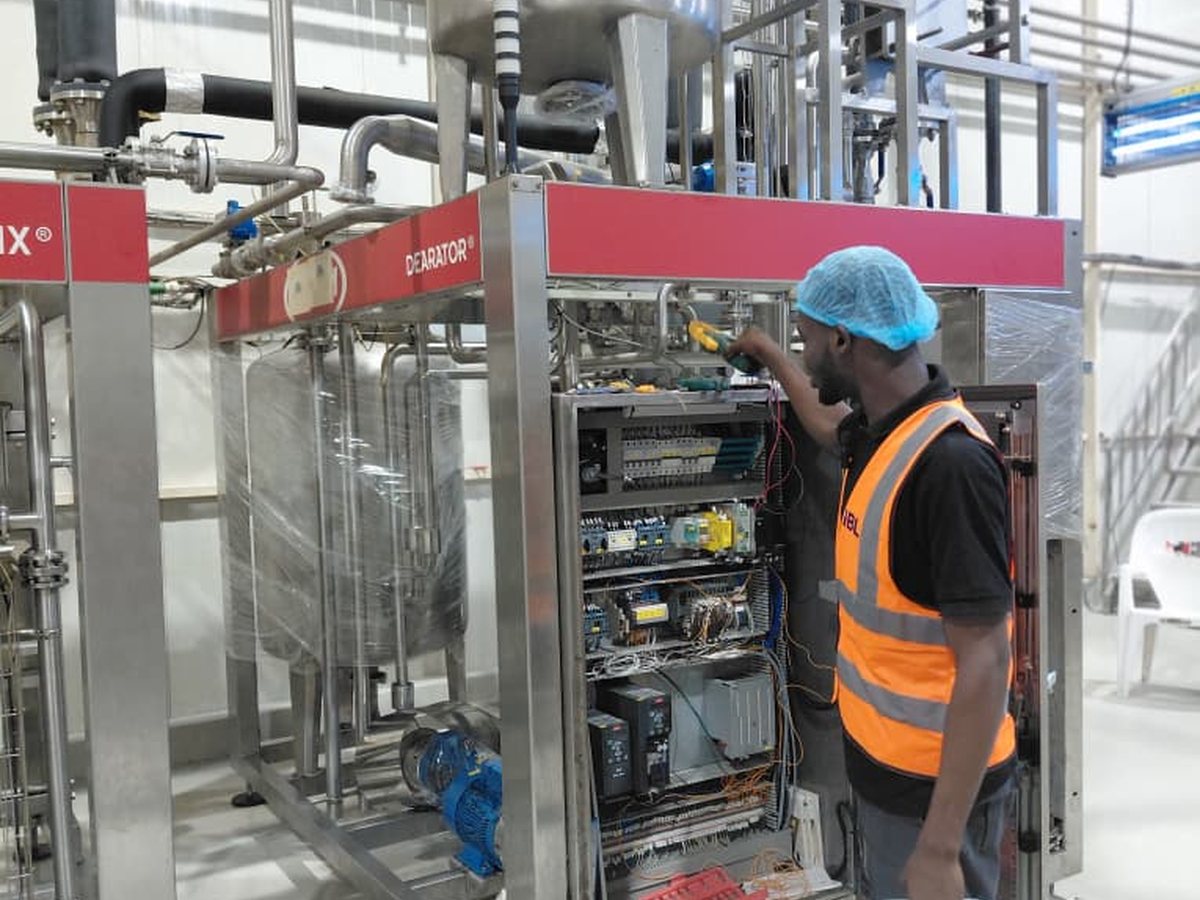
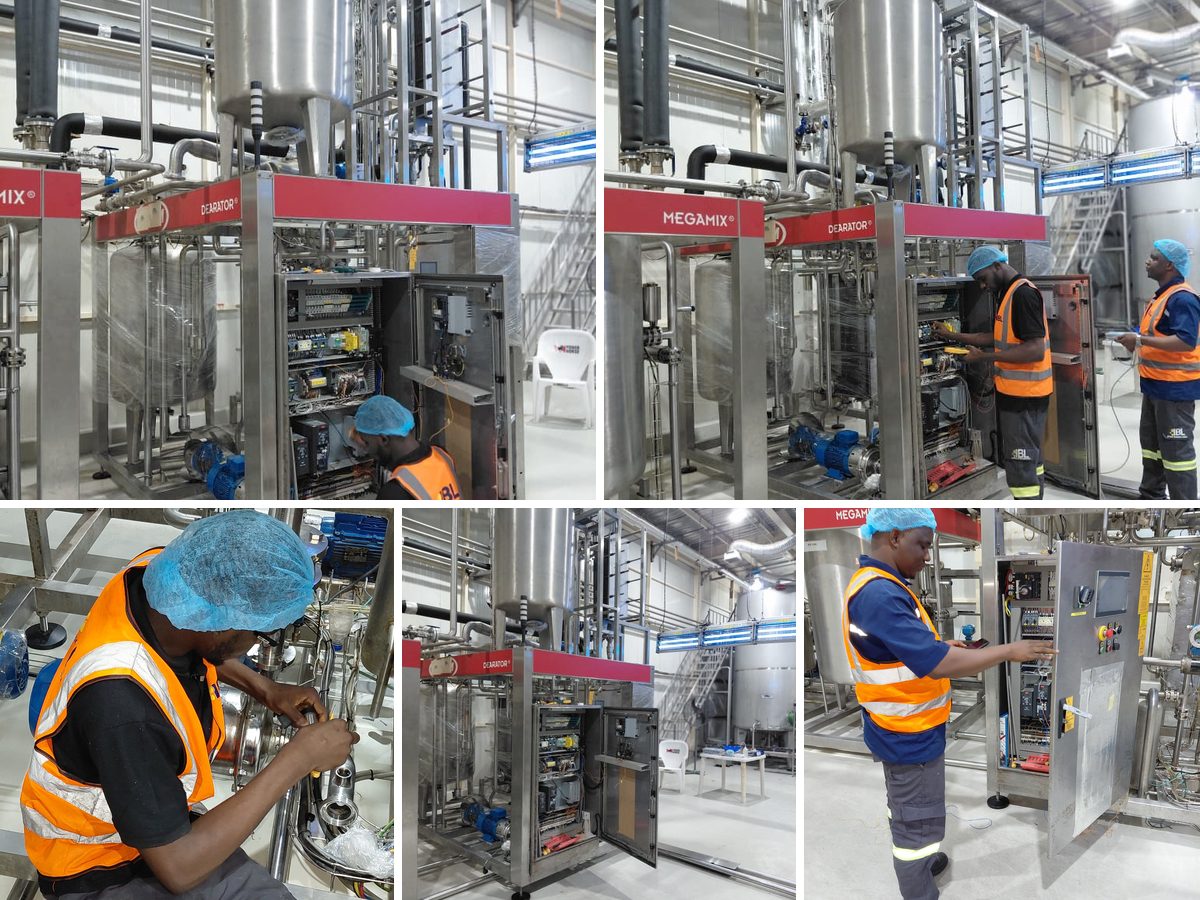
Repairs
Some relays were replaced. Some contactors were replaced. Motor terminals were worked on and replaced where necessary. The UPS battery and other failed parts were also addressed.
Troubleshooting
Because the machine had been down for more than three years, there was little knowledge of its past faults. Each fault had to be traced one by one.
The PLC program itself was working correctly, so no changes were made to it. The difficult part was the communication between the PLC and the HMI. The communication cable had to be changed to fix this.
Another difficult fault was a relay. The relay appeared to energize normally, but its terminals were not making the proper connection. This made the fault hard to find, since the relay looked like it was working. After tracing the circuit carefully, the faulty relay was identified and corrected.
The Result
After the repairs, troubleshooting and testing, the machine started working again and the operator was able to operate it.
How I approach technical work
Understand the system
Before changing anything, understand what the system is supposed to do.
Find the fault
Use the available information, measurements and observations to narrow down the problem.
Solve and learn
Fix the problem, confirm the system works properly and learn from the fault.
What I Learned From Real Work
Short lessons from the real projects above.
Conveyor Control Panel Build
Testing is an important part of electrical work. During the first test, we found a problem with the VFD programming. We traced the problem, corrected it and tested the conveyor again until it worked properly.
Juice Mixer Machine Control Panel Troubleshooting
A component can look like it is working and still have a fault. Careful tracing helped us find the faulty relay, even though it appeared to energize normally.
Keep building your practical skills
Explore the free resources, practical digital products and technical content available from Isah The Technician.